Preview·This page is live at its real address and is not collecting email addresses yet.
Claim my page →Nwaigwe Thankgod Chibuenyim
Free guide
A handbook
The Nigerian Nutrition Handbook
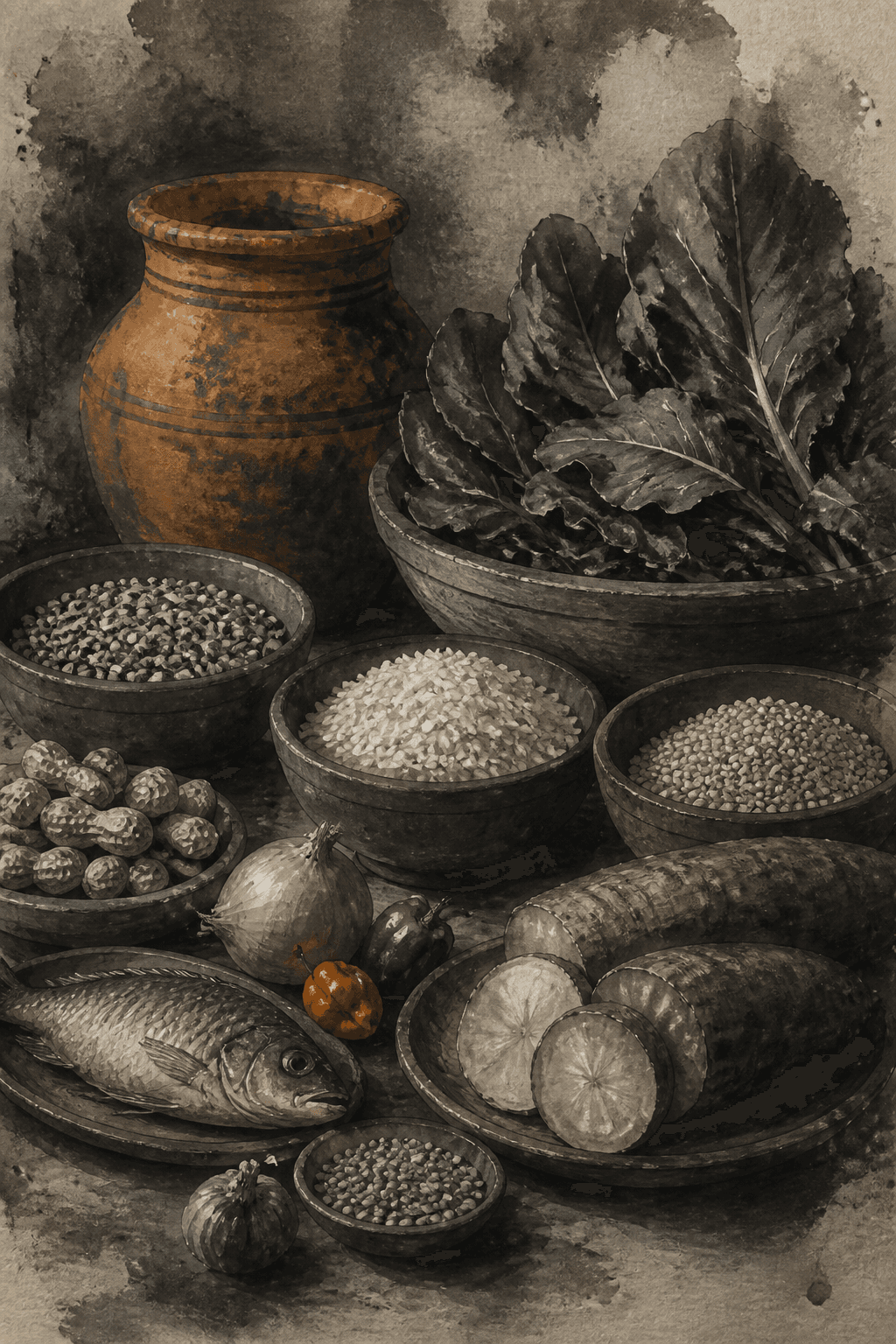
A handbook
The Nigerian Nutrition Handbook
Eat well on a Nigerian budget with everyday meals you already know, from jollof rice to eba and vegetable soup
Nwaigwe Thankgod Chibuenyim
Eat well on a Nigerian budget with everyday meals you already know, from jollof rice to eba and vegetable soup
27 pages · about 19 minutes to read · PDF
Inside the guide
9 chapters, and what each one leaves you able to do.
- 01
Start Here: Who This Book Serves
You see who the handbook is for, what you already need, and the meals you will build by the last page.
- 02
Read Calories and Nutrients Together
You tell the difference between the energy in food and the nutrients your body uses to run on.
- 03
Learn the Six Classes of Nutrients
You name all six nutrient classes and match each one to the Nigerian foods that carry it.
- 04
Break Down the Meals You Already Eat
You take jollof rice, eba, beans and plantain apart and see which nutrients each one brings.
- 05
Build a Balanced Plate From Anything
You combine carbohydrate, protein, vegetables and fat into one meal using whatever is in your kitchen.
- 06
Portion and Cook Without Losing Flavour
You set a sensible portion, cook it with less oil, and keep the taste your family expects.
- 07
Fix the Meals That Keep Going Wrong
You spot the four common slips, from watery soup to heavy frying, and repair each one on the spot.
- 08
Eat Well Outside and on a Budget
You choose wisely at the buka and the market stall, and you feed yourself well for less.
- 09
Run Your Own Plan After This Book
You run the 7-day plan, the cheat sheet and the grocery checklist on your own week after week.
Look inside
Two real pages, set exactly as they print.
01
Start Here: Who This Book Serves
You see who the handbook is for, what you already need, and the meals you will build by the last page.
You open the pot of jollof, spoon it onto a plate, add chicken, and eat. The meal is fine. The question that brought you here is whether it is enough, and no one has given you a straight answer that mentions garri, eba and beans. This handbook answers it for adults and young adults who cook and eat Nigerian food and want a working understanding of calories and nutrients rather than a diet built on ingredients you do not buy. You need a kitchen you already use, a plate you already own, and ten minutes once a week to plan. You do not need a blender, a gym membership, imported food or a food scale, though a scale helps if you own one. The first move is to weigh or estimate one normal serving of the food you eat most often and write down three numbers: the food, the portion, and roughly what it gives you. Start with rice. One level cup of cooked white rice weighs about 180 grams and gives around 240 kilocalories, about 3 grams of protein and very little fat. Cook it in two tablespoons of groundnut oil and you add about 240 kilocalories, so the same plate now carries close to 480. Add one boiled egg at about 70 kilocalories and 6 grams of protein, and a cup of efo elegusi cooked in one tablespoon of palm oil at about 200 kilocalories, and your plate reaches roughly 750 kilocalories with about 15 grams of protein, 30 grams of fat and 70 grams of carbohydrate. That is a full meal for many adults. Write your own versions next to it using your own pot and your own spoon. You have the method right when you can name the calories and the three macronutrients for three meals you actually eat, without opening a book, within two minutes. Two mistakes cost people weeks. The first is counting only the staple and ignoring the oil, because oil you pour into stew, soup and rice often adds more energy than the rice itself, and a tablespoon of any cooking oil carries about 120 kilocalories whether you notice it or not.
02
Read Calories and Nutrients Together
You tell the difference between the energy in food and the nutrients your body uses to run on.
You spoon rice and beans onto a plate and you know the meal fills you. You have no idea what it gives you beyond that. Two numbers sit in that plate, and you can learn to read both. One is the energy the food carries, measured in calories. The other is the set of nutrients your body uses to build muscle, fight infection, carry oxygen and keep your eyes and bones working. A plate of plain rice and a plate of rice with fish and ugu leaves can carry the same calories and give you very different nutrients. That gap is what you are learning to see.